
Nigeria’s New School Curriculum: Less Load, More Real Skills
- Politics
Chukwuma Zuru
- 0
- 3 minutes read
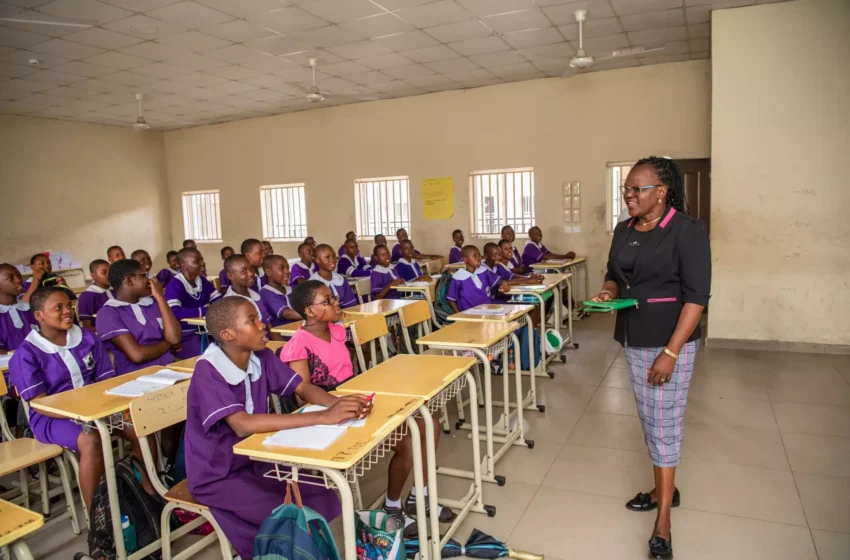
Nigeria’s government has overhauled the national school curriculum for basic and secondary education. The new framework reduces subject overload and shifts education toward practical, future-ready skills.
The change is clear. At the primary level, pupils in Primary 1–3 will now study 9–10 subjects instead of the old 13–15. Primary 4–6 will now take 10–12 subjects. Junior Secondary students (JSS 1–3) will handle 12–14 subjects rather than a bloated 15–18. Senior Secondary (SSS) now carries 8–9 core/approved subjects, down from the earlier 15–20.
But the trimming is not about cutting corners. It’s about relevance. The revised curriculum brings in digital literacy, coding, robotics, artificial intelligence, entrepreneurship, and trade/vocational courses — especially from junior secondary level upward. Students can now learn skills like solar installation, garment design, computer hardware repair, agriculture, and more depending on what their school offers.
The redesign also refocuses general education. History returns as a core subject from primary to junior secondary. At senior secondary, a new subject — Citizenship and Heritage Studies — merges civic education, history, and social studies to build grounded civic awareness.
The aim is to produce learners ready for modern challenges. Nigeria no longer wants students burdened with dozens of subjects, many irrelevant to real-world needs. The education system now values mastery, skills, and future-readiness. Students will spend more time developing competence than memorizing facts.
If implemented well, the new curriculum offers a path away from rote learning and exam-driven schooling. It gives young Nigerians a chance to graduate with practical skills, basic tech knowledge, and trade options. It positions the country better for a digital economy and global demand.
But the success of this reform depends on execution. Teachers must be retrained. Schools need resources for tech-based classes, labs, and equipment. Rural areas must get the same quality as urban centers. If not, the reform risks becoming just another paper in policy books.
Nigeria’s new curriculum is a bold step. It cuts overload, introduces modern skills, and builds flexibility. For a country with millions of youth and growing demand for jobs, this could mark a turning point. The future may finally match what today’s classrooms teach.
