
Africa’s Startup Boom Continues as Investors Pour $174 Million into the Continent’s Tech Ecosystem
- Entertainment Featured Politics Tech World
Anyaele Happiness
- 0
- 6 minutes read
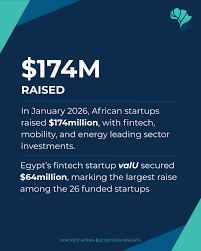
Africa’s startup ecosystem continues to demonstrate resilience and long-term potential as investors channel significant funding into innovative businesses across the continent. In January 2026 alone, African startups collectively raised approximately $174 million, signaling sustained confidence from both local and international investors. This investment momentum highlights the growing recognition of Africa as one of the world’s most promising technology frontiers, driven by a young population, rapid digital adoption, and increasing demand for innovative solutions across multiple sectors.
Over the past decade, Africa has witnessed a remarkable transformation in its technology and entrepreneurial landscape. What was once considered a small and emerging startup environment has evolved into a dynamic ecosystem attracting venture capital firms, global technology companies, and development finance institutions. The steady inflow of funding indicates that investors are not only interested in short-term opportunities but also see Africa as a long-term growth market with immense untapped potential.
Fintech remains the dominant sector attracting the largest share of startup funding across Africa. With millions of people still lacking access to traditional banking services, financial technology companies are filling the gap by providing mobile payments, digital banking, lending platforms, and financial management tools. Countries such as Nigeria, Kenya, South Africa, and Egypt continue to lead the fintech revolution, with startups leveraging mobile technology to reach underserved communities. The widespread adoption of smartphones and mobile money platforms has made it easier for these companies to scale their services quickly and reach millions of users.
In addition to fintech, sectors such as health technology, logistics, e-commerce, and agricultural technology are also gaining strong investor interest. Health tech startups are addressing critical healthcare access challenges by offering telemedicine platforms, digital medical records, and AI-powered diagnostic tools. Logistics startups are improving supply chain efficiency by connecting businesses with delivery networks and optimizing transportation routes through digital platforms. E-commerce platforms are expanding rapidly as more African consumers gain access to internet services and digital payment solutions.
Agricultural technology, commonly known as agri-tech, is another rapidly growing segment within Africa’s startup ecosystem. Agriculture remains a major source of livelihood for millions of Africans, yet the sector has historically struggled with inefficiencies and limited access to markets. Startups are now introducing digital tools that help farmers access weather information, financing, modern farming techniques, and direct market connections. These innovations are helping to increase productivity and income for farmers while improving food security across the continent.
Another important factor driving the growth of Africa’s startup ecosystem is the rising number of technology hubs, incubators, and accelerators that support early-stage entrepreneurs. Cities such as Lagos, Nairobi, Cape Town, Cairo, and Accra have emerged as major startup hubs, offering mentorship programs, networking opportunities, and funding access to young innovators. These hubs play a critical role in helping entrepreneurs refine their business ideas, connect with investors, and scale their ventures.
International investors are also paying closer attention to Africa’s technology sector. Venture capital firms from the United States, Europe, and Asia are increasingly establishing partnerships and investment funds focused specifically on African startups. Large global companies are also entering the ecosystem through strategic investments, acquisitions, and partnerships with local startups. This growing international involvement brings not only financial resources but also technical expertise and global market access.
Despite the encouraging funding trends, African startups still face several challenges that can slow their growth. Regulatory uncertainty, limited access to infrastructure, and economic volatility remain significant obstacles in some countries. Many startups also struggle with scaling their operations across borders due to differences in regulations, payment systems, and market conditions. Access to follow-up funding for startups that have passed the early stage can also be difficult, especially during periods of global economic uncertainty.
However, many industry experts believe these challenges also present opportunities for innovation and collaboration. Governments across Africa are gradually introducing policies aimed at supporting digital transformation and entrepreneurship. Several countries have launched startup acts, innovation funds, and tax incentives designed to attract investors and encourage the development of local technology companies. If these policies continue to improve, Africa’s startup ecosystem could grow even faster in the coming years.
The role of Africa’s young population cannot be overstated in this transformation. The continent has one of the youngest populations in the world, with millions of young people entering the workforce each year. Many of them are highly tech-savvy and eager to build businesses that solve local problems using digital tools. This entrepreneurial energy is fueling a wave of innovation that is reshaping industries and creating new economic opportunities.
Looking ahead, analysts expect Africa’s startup ecosystem to continue expanding as digital infrastructure improves and more investors recognize the continent’s potential. Emerging technologies such as artificial intelligence, blockchain, and data analytics are likely to play an increasingly important role in the next generation of African startups. As these technologies become more accessible, they will enable entrepreneurs to build even more advanced solutions tailored to Africa’s unique challenges.
The $174 million raised by African startups in January 2026 may represent just one month of investment activity, but it reflects a broader trend of growing confidence in Africa’s innovation economy. As startups continue to address real-world problems and deliver scalable solutions, the continent’s technology sector is steadily establishing itself as a key driver of economic growth and global innovation.
