
Africa’s Fintech Revolution Reshapes the Future of Money Across the Continent
- Entertainment Featured Tech World
Anyaele Happiness
- 0
- 5 minutes read
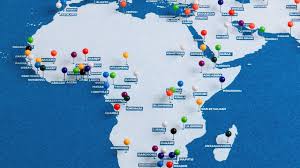
Africa’s financial technology landscape is undergoing a rapid transformation, driven by innovation, mobile adoption, and the urgent need to expand financial inclusion. At the center of this shift are fast-growing companies such as Flutterwave and Paystack, which are redefining how individuals and businesses send, receive, and manage money across borders and within local economies. These platforms have become key pillars in the continent’s digital financial ecosystem, enabling seamless payments in regions where traditional banking infrastructure has often been limited.
The rise of fintech in Africa is closely tied to the continent’s mobile-first reality. Unlike regions where financial systems evolved around banks and credit cards, many African markets have leapfrogged directly into mobile money and digital wallets. This shift has allowed millions of previously unbanked individuals to participate in the formal economy using only a smartphone. As a result, financial services are becoming more accessible, flexible, and tailored to local needs.
In countries like Lagos, fintech innovation has become a defining feature of the modern economy. The city has emerged as one of Africa’s leading technology hubs, attracting startups, investors, and global attention. Its ecosystem is powered by a young, tech-savvy population, growing internet penetration, and increasing demand for digital financial solutions. Lagos now stands alongside cities like Nairobi and Cape Town as a central node in Africa’s innovation network.
One of the most significant impacts of fintech growth is improved financial inclusion. Traditional banking systems have often struggled to reach rural and low-income populations due to infrastructure and cost barriers. Fintech platforms are bridging this gap by offering low-cost, accessible services that operate entirely through mobile devices. This includes peer-to-peer transfers, merchant payments, savings tools, and micro-lending services that were previously unavailable to large segments of the population.
Cross-border payments are another area experiencing major disruption. Historically, sending money between African countries has been slow and expensive due to fragmented financial systems. Fintech companies are now building integrated networks that allow faster and more affordable transactions across borders. This is particularly important for trade, remittances, and regional economic integration, all of which are crucial for long-term growth.
Despite this progress, challenges remain. Regulatory environments across African countries are often inconsistent, creating difficulties for fintech companies operating across multiple jurisdictions. Compliance requirements, licensing issues, and policy uncertainty can slow expansion and limit scalability. However, governments are increasingly recognizing the importance of digital finance and are beginning to introduce more supportive frameworks.
Infrastructure gaps also continue to pose challenges. Reliable internet access, electricity stability, and digital literacy vary widely across the continent. These factors can limit the reach of fintech solutions, particularly in rural areas. Addressing these gaps will be essential for ensuring that the benefits of financial technology are shared broadly and equitably.
Security and trust are also critical concerns. As more financial transactions move online, protecting users from fraud and cybercrime becomes increasingly important. Fintech companies are investing heavily in encryption, identity verification systems, and fraud detection technologies to build confidence in digital platforms. Trust remains a key factor in driving adoption, especially among users transitioning from cash-based systems.
Investment in African fintech continues to grow as global investors recognize the continent’s potential. Venture capital funding has supported the expansion of startups, enabling them to scale operations and develop new products. This influx of capital has accelerated innovation, but it also increases pressure on companies to achieve sustainable growth and profitability.
Looking ahead, Africa’s fintech sector is expected to play a central role in shaping the future of global finance. As digital infrastructure improves and regulatory frameworks evolve, the continent is likely to see even greater integration of financial services across borders and industries. The combination of mobile technology, entrepreneurial energy, and unmet demand creates a uniquely fertile environment for continued innovation.
In the end, Africa’s fintech revolution is not just about technology—it is about access, empowerment, and economic transformation. By connecting millions of people to financial systems for the first time, companies like Flutterwave and Paystack are helping to redefine what financial inclusion looks like in the 21st century.
