
ECOWAS Security Alliance Expands as West Africa Faces Rising Cross-Border Terror Attacks
- Featured Politics World
Anyaele Happiness
- 0
- 3 minutes read
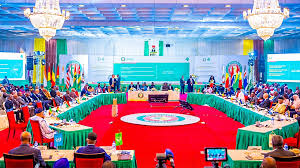
West Africa is entering a critical phase in its ongoing battle against extremist violence as the Economic Community of West African States (ECOWAS) intensifies efforts to strengthen regional security cooperation in response to escalating cross-border terrorist activity. The renewed push for military coordination comes amid increasing reports of coordinated attacks across border communities linking Mali, Burkina Faso, and Niger, where armed groups have continued to exploit weak surveillance systems and political instability to expand their influence.
Security officials across the region have acknowledged that the nature of the threat has evolved significantly in recent years, with extremist groups now operating with greater mobility, improved communication networks, and deeper integration into remote rural economies. These developments have made traditional national security responses less effective, prompting renewed calls for a unified regional military strategy capable of responding faster and more decisively to emerging threats.
ECOWAS leaders have reportedly been working behind the scenes to rebuild trust among member states following political tensions and shifting alliances in the Sahel region. Despite these challenges, intelligence-sharing arrangements and joint operational planning are being expanded to improve coordination across national borders. Military analysts suggest that the success of these efforts will depend heavily on political will, funding commitments, and the ability of member states to overcome internal disagreements that have previously weakened collective action.
The humanitarian impact of the crisis continues to grow, with thousands of civilians displaced from border communities as attacks intensify. Farmers, traders, and rural families have been particularly affected, as insecurity disrupts agriculture, local markets, and cross-border trade routes that many communities rely on for survival. Humanitarian agencies warn that worsening food insecurity could become a secondary crisis if stability is not restored quickly.
International partners, including global security organizations and development agencies, have expressed concern about the long-term stability of the Sahel and coastal West Africa. There is growing recognition that military intervention alone may not be sufficient to address the root causes of extremism, which include poverty, unemployment, weak governance, and limited access to education in vulnerable regions.
As ECOWAS continues to refine its security framework, the region finds itself at a crossroads where cooperation, political alignment, and sustained investment in security infrastructure will determine whether West Africa can contain the growing threat or face further destabilization in the months ahead.
