
World Enters New Nuclear Era as U.S. and Russia Agree to Uphold New START Limits
- Entertainment Featured Politics World
Anyaele Happiness
- 0
- 3 minutes read
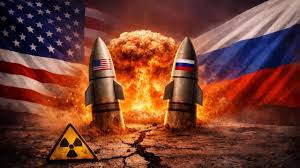
As the New START nuclear arms treaty reaches its official expiration, the United States and Russia have taken a rare and consequential step by agreeing to continue observing its limits, signaling a cautious commitment to stability in an increasingly fragile global security environment. New START, signed in 2010, has long served as the backbone of nuclear arms control between the world’s two largest nuclear powers, placing firm caps on deployed strategic warheads, intercontinental ballistic missiles, submarine-launched missiles, and heavy bombers. For years, it has also provided transparency through inspections and data exchanges, reducing the risk of miscalculation and misunderstanding between rivals whose combined nuclear arsenals still dwarf those of the rest of the world.
The decision to uphold the treaty’s restrictions beyond its formal end comes at a time when diplomatic relations between Washington and Moscow remain deeply strained. Against this backdrop, the agreement reflects a shared recognition that allowing New START to collapse outright could open the door to an uncontrolled nuclear arms race, one that would not only destabilize bilateral relations but also send shockwaves through the global security system. By choosing continued compliance, even informally, both sides appear to be prioritizing predictability over provocation, at least in the short term.
New START’s importance cannot be overstated. It is the last surviving pillar of Cold War-era arms control, following the collapse or withdrawal from earlier agreements such as the Intermediate-Range Nuclear Forces Treaty. Without it, there would be no binding framework limiting the size of U.S. and Russian strategic arsenals for the first time in decades. Analysts warn that such a vacuum could encourage rapid weapons expansion, modernization without restraint, and a heightened risk of accidents or misjudgments, particularly as new technologies like hypersonic weapons and advanced missile defenses complicate traditional deterrence calculations.
While the current understanding to continue observing the treaty’s limits is widely seen as a positive move, it is not without uncertainty. The arrangement lacks the legal force of a ratified treaty and depends heavily on political will and mutual trust, both of which remain fragile. Skeptics argue that without a clear roadmap toward a new, enforceable agreement, the extension may simply delay an inevitable breakdown in arms control. Supporters, however, see it as a critical breathing space, buying time for diplomats to explore a successor framework that could address modern strategic realities and potentially include other nuclear-armed states.
For the rest of the world, the implications are profound. The continued observance of New START offers reassurance that, despite rising geopolitical tensions, the most destructive weapons ever created remain under some level of control. At the same time, it serves as a stark reminder that global nuclear stability still rests heavily on the decisions of a few powerful nations. Whether this moment becomes the foundation for renewed arms control or merely a temporary pause before a more dangerous era will depend on what comes next. What is clear is that, for now, the world has avoided crossing a critical threshold into complete nuclear uncertainty.
