
Africa’s Financial Future Under Pressure as Leaders Scramble to Fund Development Without Foreign Aid
- Entertainment Featured Politics World
Anyaele Happiness
- 0
- 8 minutes read
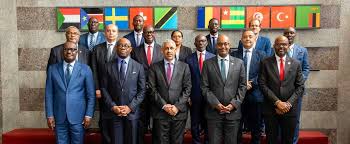
African leaders, economists, and financial institutions are gathering in Brazzaville for one of the continent’s most critical economic meetings in recent years as concerns grow over shrinking foreign aid, rising debt, and the urgent need for Africa to finance its own future. The 2026 Annual Meetings of the African Development Bank (AfDB) have become a major focal point for discussions about how Africa can survive economically in a rapidly changing global environment where traditional international support is becoming less reliable.
The meeting comes at a difficult time for many African countries. Global economic instability, declining development assistance, high debt burdens, and rising borrowing costs are placing enormous pressure on governments across the continent. According to reports discussed at the summit, Africa currently faces an estimated annual development financing gap of more than $400 billion needed to fund infrastructure, energy, agriculture, healthcare, climate resilience, transportation, and job creation.
For decades, many African economies depended heavily on international aid, concessional loans, and support from global financial institutions to fund development projects. However, changing geopolitical priorities and economic pressures in Western countries are now reducing the flow of aid into Africa. Wealthy nations are increasingly cutting overseas development budgets, while institutions such as the African Development Fund are facing funding uncertainty from major donors.
This growing financial pressure is forcing African leaders to rethink the continent’s economic strategy. Instead of depending primarily on foreign support, discussions at the AfDB meetings are focusing on how Africa can mobilize its own financial resources to fund development projects internally. AfDB officials estimate that Africa holds approximately $4 trillion in domestic capital through pension funds, sovereign wealth funds, insurance assets, remittances, and savings systems that could potentially be redirected into major development investments.
The new president of the African Development Bank, Sidi Ould Tah, has introduced a proposal known as the New African Financial Architecture for Development (NAFAD), which aims to pool and organize African capital for large-scale infrastructure and economic projects across the continent. Supporters of the initiative believe Africa can no longer rely on unpredictable foreign aid if it wants sustainable economic growth and long-term financial independence.
The theme of the 2026 Annual Meetings — “Mobilising Africa’s Development Financing at Scale in a Fragmented World” — reflects the seriousness of the challenge facing the continent. Leaders attending the summit argue that Africa must now build stronger financial systems capable of supporting development without excessive dependence on external lenders.
One of the biggest concerns discussed at the meetings is Africa’s rising debt burden. Many countries are struggling with debt repayment after years of borrowing to finance infrastructure projects, social programs, and economic recovery plans. Global inflation, rising interest rates, and currency depreciation have made debt servicing even more difficult. Several African nations are now spending large portions of their national budgets on debt repayment instead of investing in healthcare, education, and public infrastructure.
Economic experts warn that without stronger domestic financing systems, Africa could become trapped in a cycle of dependency and financial vulnerability. Analysts at the summit stressed that Africa’s problem is not necessarily the lack of wealth, but the inability to effectively channel existing resources into productive investments that create jobs and economic growth.
Another major issue dominating discussions is the way international financial markets view African economies. African leaders argue that global credit rating systems often exaggerate the financial risks associated with investing in Africa, leading to extremely high borrowing costs for governments and businesses across the continent. Leaders attending recent financial summits in Nairobi called for reforms to global risk assessment systems, arguing that Africa is unfairly treated as a high-risk investment destination despite significant economic opportunities.
Kenyan President William Ruto and several African finance ministers have openly criticized international credit rating agencies, saying their assessments discourage investment and increase the cost of borrowing for African countries. Some leaders are now pushing for the creation of an independent African credit rating agency that could provide fairer assessments of the continent’s economic realities.
At the same time, international tensions and global conflicts are creating additional economic uncertainty for Africa. Rising fuel prices, food insecurity, supply chain disruptions, and global trade instability continue to affect African economies. The ongoing conflict in the Middle East and other geopolitical crises are increasing inflation pressures and threatening economic recovery efforts in several countries.
Energy financing is also emerging as a major priority. Countries such as South Africa are already exploring large-scale energy investment projects, including nuclear power expansion, as governments search for reliable electricity solutions to support industrial growth and reduce dependence on unstable energy systems.
Infrastructure remains another urgent challenge. Roads, railways, ports, electricity grids, internet connectivity, and agricultural processing facilities require massive investment if Africa hopes to compete economically with other regions. The AfDB has emphasized that financing these projects is essential for job creation and economic transformation, particularly as Africa’s population continues to grow rapidly.
Several economists at the summit warned that Africa’s youth population could either become the continent’s greatest economic strength or its biggest crisis depending on whether governments succeed in creating employment opportunities. With millions of young Africans entering the labor market every year, leaders say urgent investment in industries, technology, entrepreneurship, agriculture, and manufacturing is necessary to avoid worsening unemployment and social instability.
Despite the challenges, some financial experts remain optimistic about Africa’s long-term potential. The continent possesses enormous natural resources, growing urban populations, expanding digital economies, and increasing consumer markets. Supporters of the new financing strategy believe that if African governments improve governance, reduce corruption, strengthen tax systems, and create investor-friendly environments, the continent could unlock major economic growth over the next decade.
However, critics warn that mobilizing domestic capital will not be easy. Many African countries still struggle with low savings rates, weak financial institutions, political instability, and limited investor confidence. Others fear that pension funds and sovereign wealth reserves could face political misuse if transparency and accountability systems are not strengthened.
The Ebola outbreak currently affecting parts of Central Africa has also added another layer of concern to the meetings. Health risks and humanitarian pressures are now intersecting with economic discussions, reminding leaders that development challenges in Africa are deeply interconnected.
As the AfDB meetings continue in Brazzaville, many observers believe the discussions could shape Africa’s economic direction for years to come. The central question dominating the summit is no longer whether Africa needs development financing, but whether the continent can finally build the financial independence required to control its own future.
For many African leaders, the message is becoming increasingly clear: the era of relying heavily on foreign aid may be fading, and Africa may now have little choice but to fund its own development ambitions or risk falling further behind in an increasingly competitive global economy.
