
AI Giants Race Ahead as Competition Redefines the Future of Technology
- Business Entertainment Featured Tech World
Anyaele Happiness
- 0
- 5 minutes read
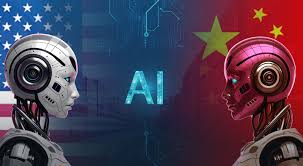
The global technology landscape is undergoing a profound transformation as artificial intelligence takes center stage, with industry leaders like OpenAI, Google, and Microsoft accelerating a race that is rapidly reshaping how people interact with digital systems. What was once a niche area of research has now evolved into the most competitive and influential sector in modern technology, driving innovation at an unprecedented pace.
At the heart of this shift is the emergence of generative AI, a category of technology capable of producing human-like text, images, code, and more. These systems are no longer experimental; they are being integrated directly into widely used products and services. From search engines to office software, AI is becoming a built-in feature rather than an optional tool. This transition marks a significant turning point, where artificial intelligence moves from the background into the core of everyday digital experiences.
For companies like OpenAI, the focus has been on refining conversational AI and expanding its practical applications across industries. Meanwhile, Google is embedding AI deeper into its ecosystem, enhancing search capabilities and redefining how information is accessed and presented. Microsoft, leveraging strategic partnerships and infrastructure, is integrating AI into its productivity suite, transforming tools that millions rely on daily. Each company is approaching the same goal from a different angle, but the objective remains clear: to lead the next era of computing.
This competition is not just about technological superiority; it is also about influence. The company that establishes itself as the dominant force in AI will likely shape the standards, ethics, and direction of the industry for years to come. As a result, investment in AI research and development has surged, with billions of dollars being poured into innovation, talent acquisition, and infrastructure. The scale of this investment reflects the belief that AI is not just another technological trend, but a foundational shift comparable to the rise of the internet.
One of the most visible outcomes of this race is the rise of AI-powered assistants, often referred to as “copilots.” These tools are designed to enhance human productivity by assisting with tasks such as writing, coding, data analysis, and decision-making. Rather than replacing human effort, they aim to augment it, allowing individuals to achieve more with less time and effort. This has significant implications for the workplace, where efficiency and adaptability are becoming increasingly important.
However, the rapid advancement of AI also brings a set of challenges that cannot be ignored. Concerns about data privacy, misinformation, and ethical use are becoming more prominent as these technologies become more powerful. There is an ongoing debate about how to regulate AI without stifling innovation, as governments and organizations attempt to strike a balance between progress and responsibility. The decisions made in this area will play a crucial role in determining how AI is integrated into society.
Another critical issue is the impact on employment. While AI has the potential to create new opportunities, it also threatens to disrupt traditional job roles, particularly those involving repetitive or routine tasks. This has sparked discussions about the need for reskilling and education, ensuring that the workforce is prepared for a future where collaboration with AI is the norm rather than the exception.
Despite these challenges, the momentum behind artificial intelligence shows no signs of slowing down. The pace of development suggests that AI will continue to evolve rapidly, introducing new capabilities and applications that were previously unimaginable. For consumers, this means more personalized and efficient digital experiences. For businesses, it represents both an opportunity and a necessity to adapt in order to remain competitive.
As the rivalry between OpenAI, Google, and Microsoft intensifies, the broader impact of their innovations is being felt across the global economy. Industries ranging from healthcare to finance are beginning to harness the power of AI, unlocking new possibilities and redefining existing processes. This widespread adoption underscores the transformative potential of the technology, positioning it as a key driver of future growth.
In the end, the AI race is about more than just technology; it is about shaping the future of human interaction with machines. The advancements being made today will influence how people work, learn, and communicate for generations to come. As these companies continue to push the boundaries of what is possible, the world watches closely, aware that the outcome of this competition will define the next chapter of the digital age.
